
UX Case Study
Redesigning Triangle Stepping Stones for the Recovery Community
How user-centered design transformed a recovery clubhouse website to better serve people seeking help, regular attendees, and potential supporters.
TL;DR
The 30-second version
Replaced an overwhelming monthly calendar with a day-based meeting finder, added a live "Next Meeting" countdown visible on every page, and built a Webflow CMS so board members can update meetings without a developer. The result: someone looking for a meeting can now find one in under 5 seconds.
01. The Problem
Three Users, One Website
Triangle Stepping Stones is a 501(c)(3) recovery clubhouse in Williamsburg, Virginia hosting 12-step meetings every day. The existing website worked, but it wasn't optimized for the distinct needs of its three primary audiences.
People Seeking Recovery
May be in crisis. First touchpoint with TSS. Needs answers fast.
- Find a meeting now
- Know what to expect
Regular Attendees
Already in recovery. Checks schedule frequently, often on mobile.
- See today's meetings
- Next meeting countdown
Donors & Grant Officers
Evaluating TSS for funding. Needs credibility signals.
- Verify 501(c)(3) status
- See community impact
The core insight: A recovery clubhouse website serves users at very different moments. From someone in crisis searching "AA meetings near me" to a grant officer evaluating organizational credibility, each needs a fundamentally different experience. But the original site treated them all the same.
02. The Redesign
Designing for Each Journey
For People Seeking Recovery: Immediate Answers
The new homepage features the actual clubhouse building (not stock photos) and a "Next Meeting" countdown that immediately answers the most urgent question. No scanning, no mental math.
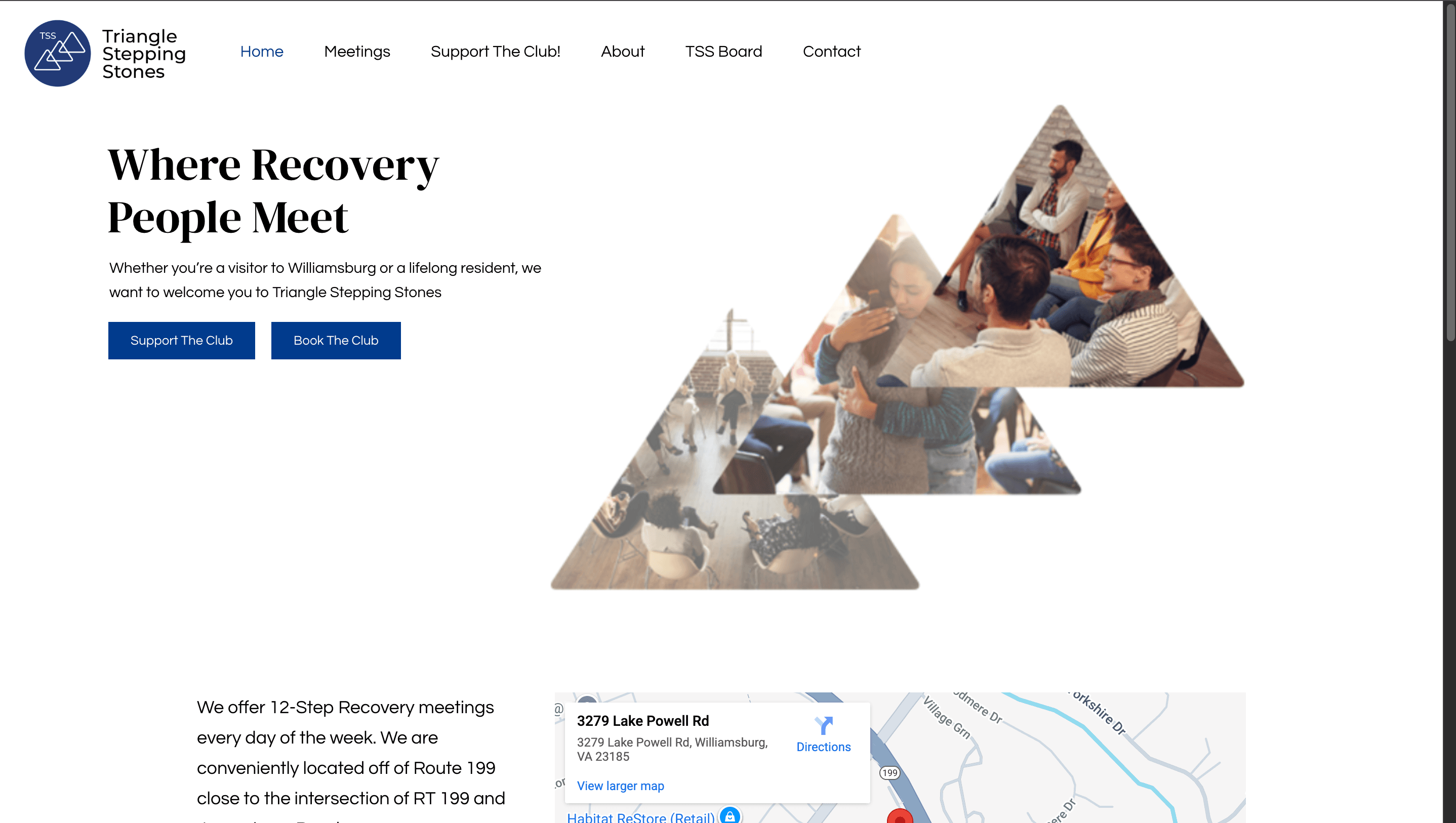
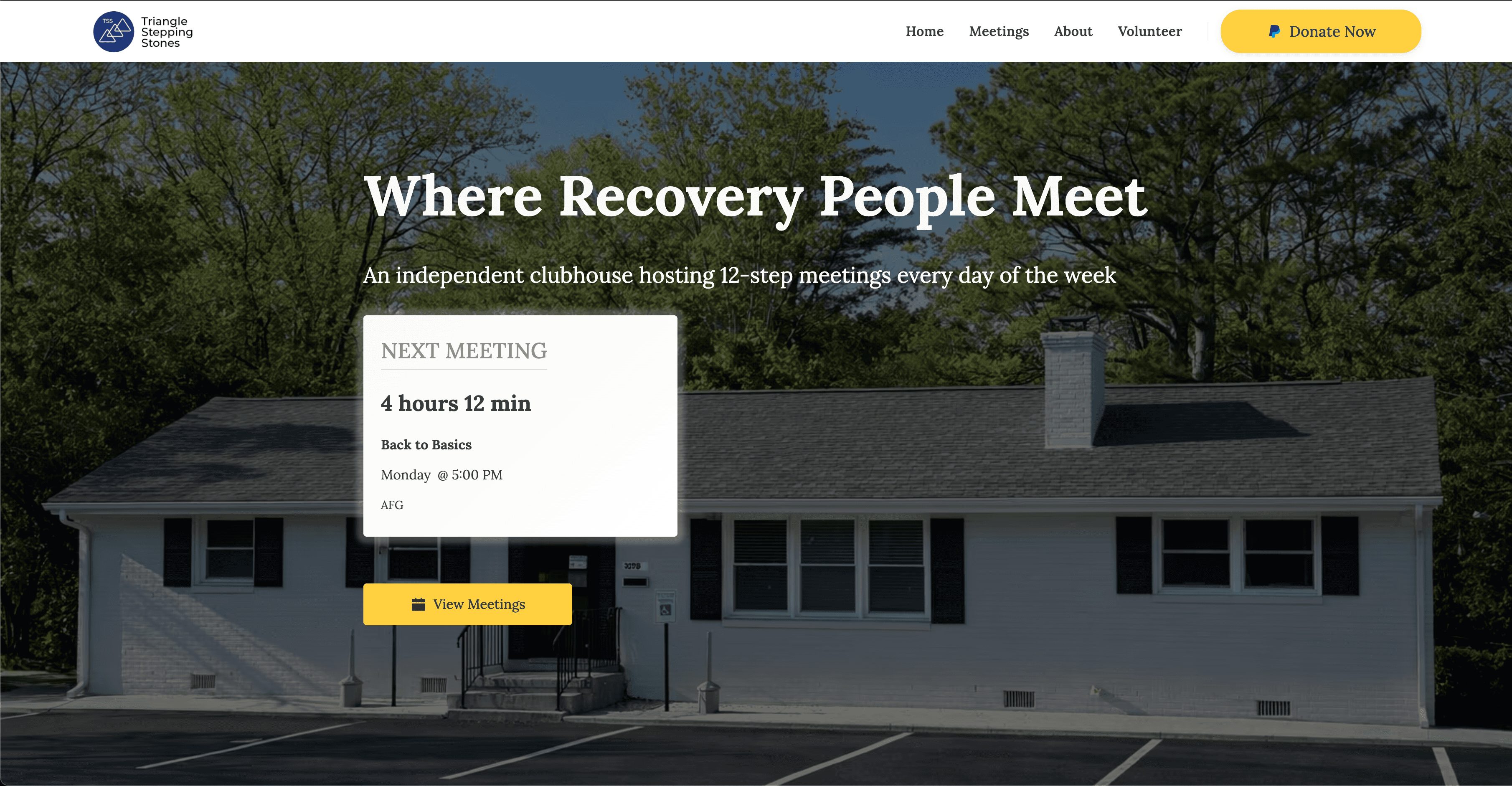
Stock photo → actual clubhouse. Donation CTA → meeting countdown.
For Regular Attendees: Scannable Schedule
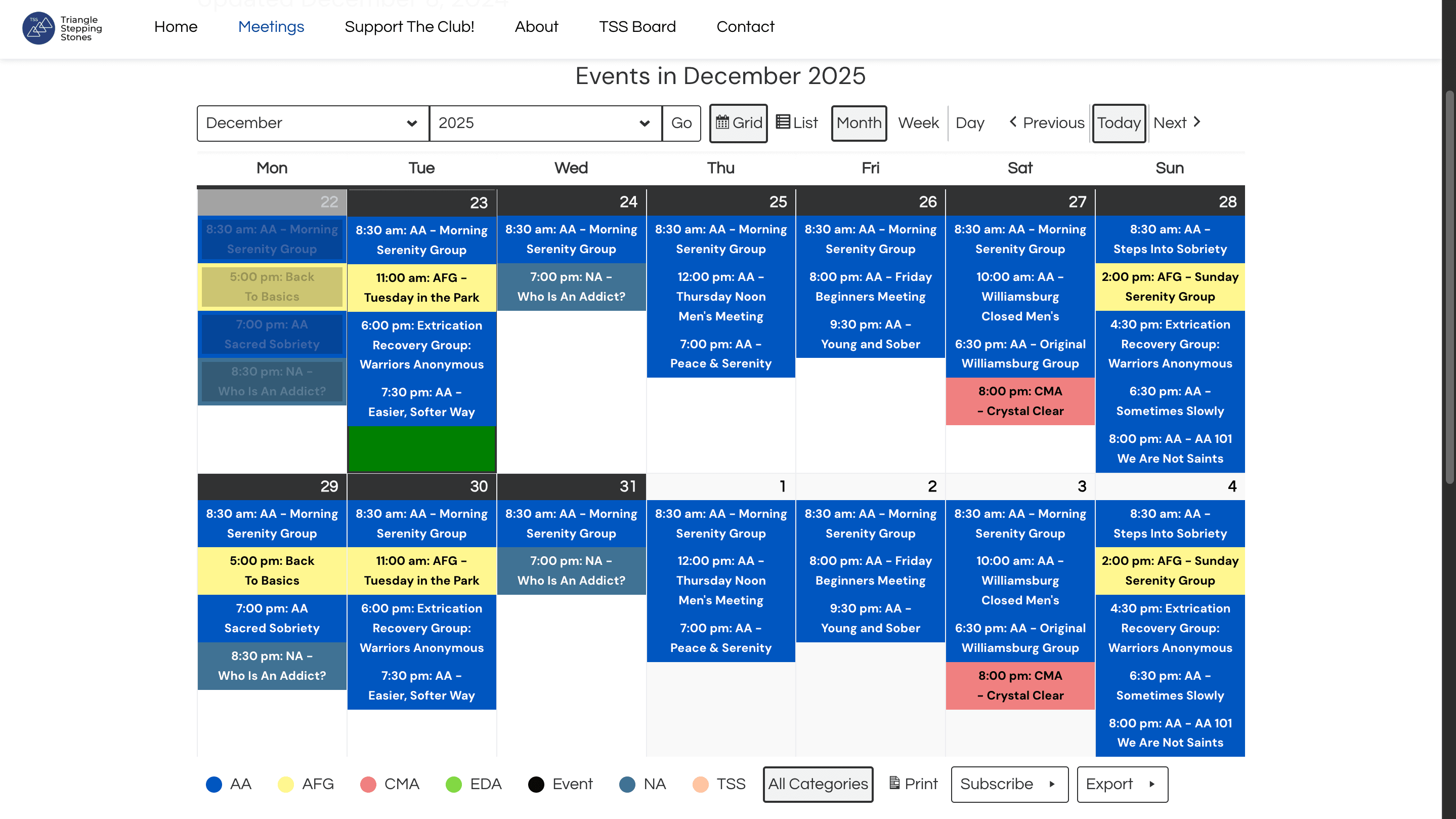
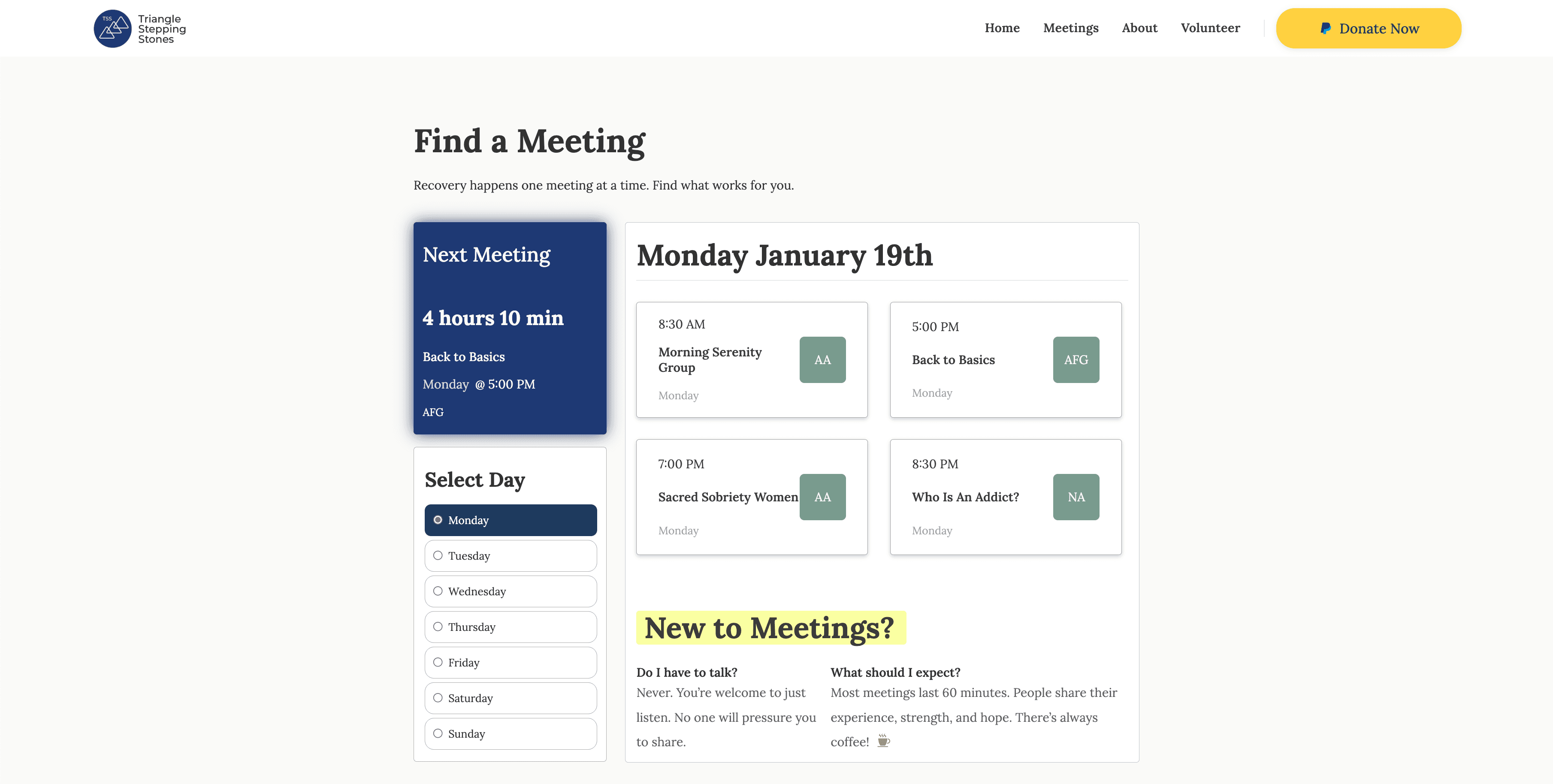
The monthly calendar view required significant cognitive load to answer "What meeting can I attend today?" The redesigned meetings page shows today's meetings by default, which is the information 90% of visitors actually need.
Dense monthly calendar → simple day selector with meeting cards.
I also added a "New to Meetings?" section addressing first-timer anxieties: "Do I have to talk?" (No.) "What should I expect?" (Coffee, shared stories, no pressure.) This reduces the fear that keeps many people from attending their first meeting.
For Donors, Volunteers, and Officers: New Elements and Credibility Signals
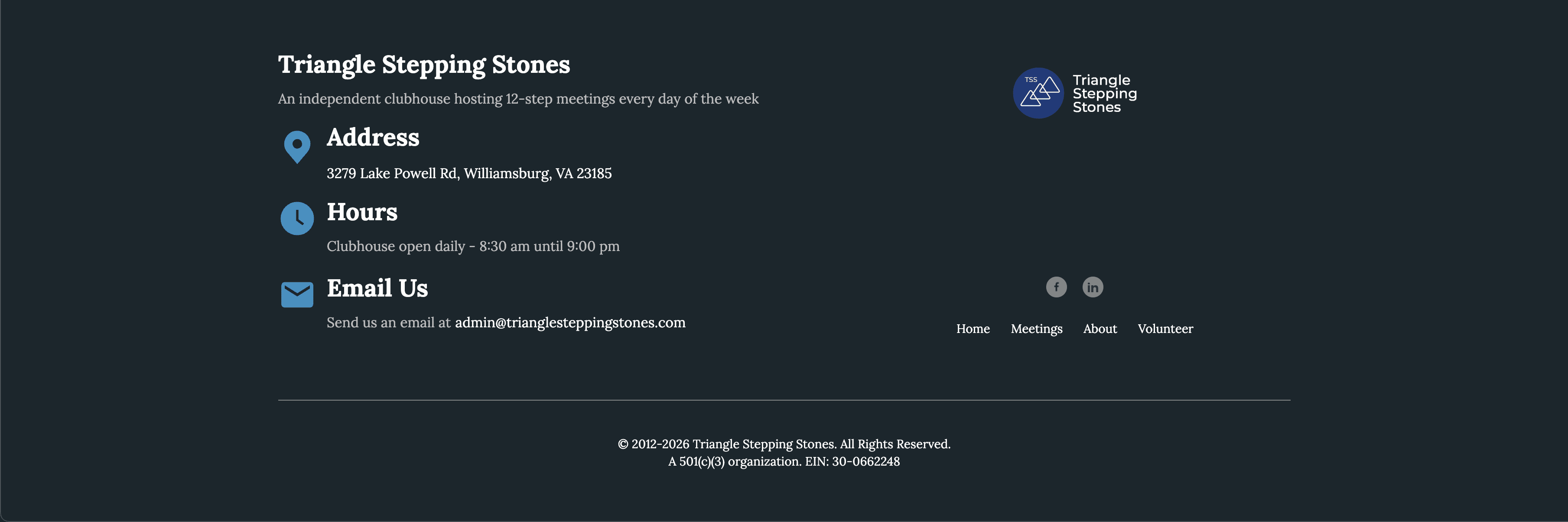
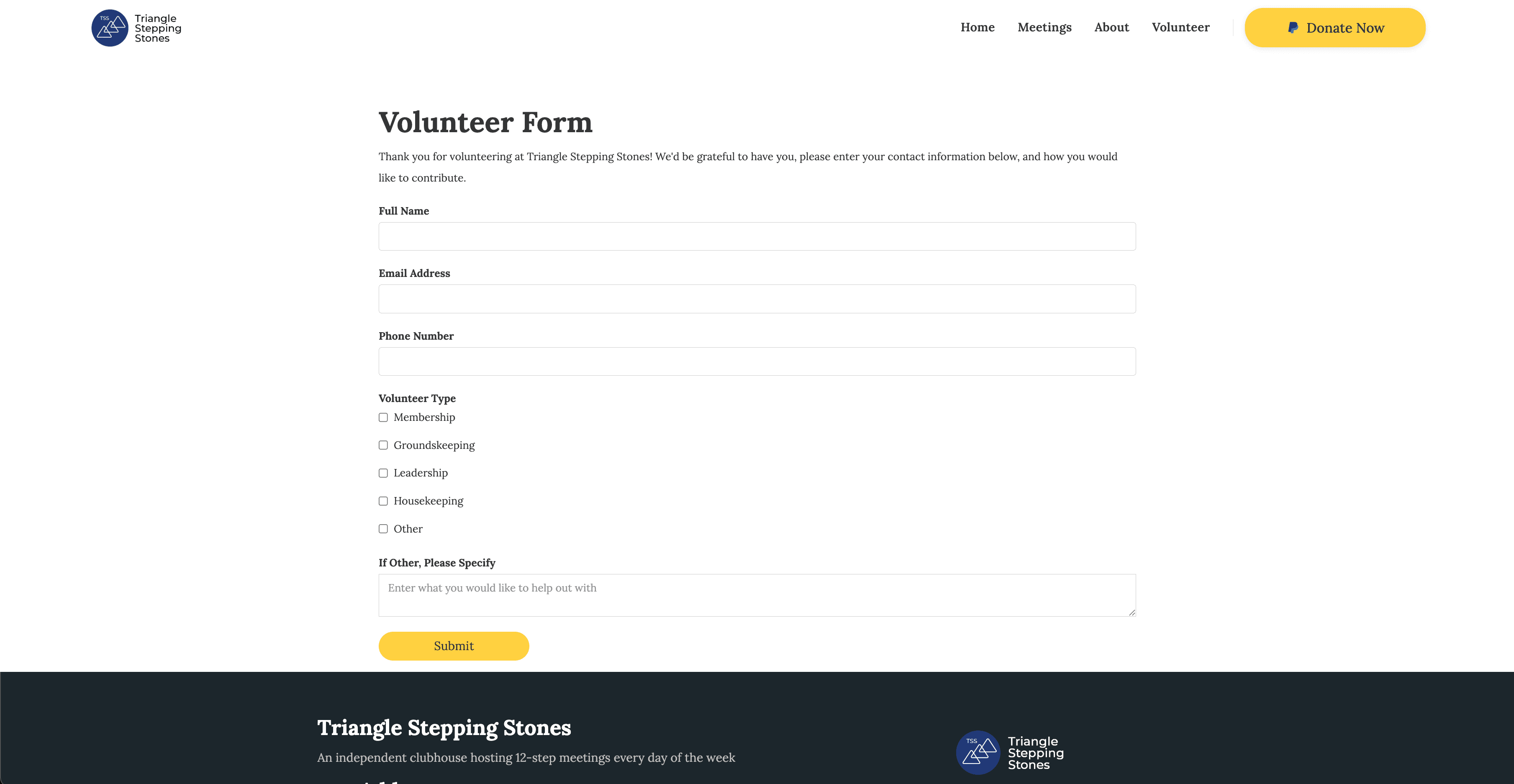
The footer displays the EIN number on every page, critical for grant applications. A prominent "Donate Now" CTA in the navbar makes it easy for supporters to contribute from any page. The volunteer form streamlines the intake process, allowing volunteers to self-select their interests and reducing back-and-forth for the organization.
03. Technical Solution
Empowering Board Members with a CMS
A beautiful meeting display means nothing if the data is stale. The original site used a third-party calendar plugin that was difficult to update. I built a custom Webflow CMS collection where each meeting is an item with structured fields: name, day, time, and type (AA, NA, AFG).
No Technical Skills Required
Board members update meetings through Webflow's visual editor.
Instant Updates
Changes reflect immediately across the entire site.
Single Source of Truth
Homepage countdown and meetings page pull from the same data.
Future-Proof
Adding a meeting type updates the design once, not every item.
04. Impact
Designed for Recovery
For people seeking recovery, the site now answers "When is the next meeting?" immediately and shows them the actual building they'll be visiting.
For regular attendees, checking the schedule takes seconds instead of scanning a dense calendar.
For donors and grant officers, the site conveys legitimacy through professional design, concrete metrics, and visible nonprofit credentials.